
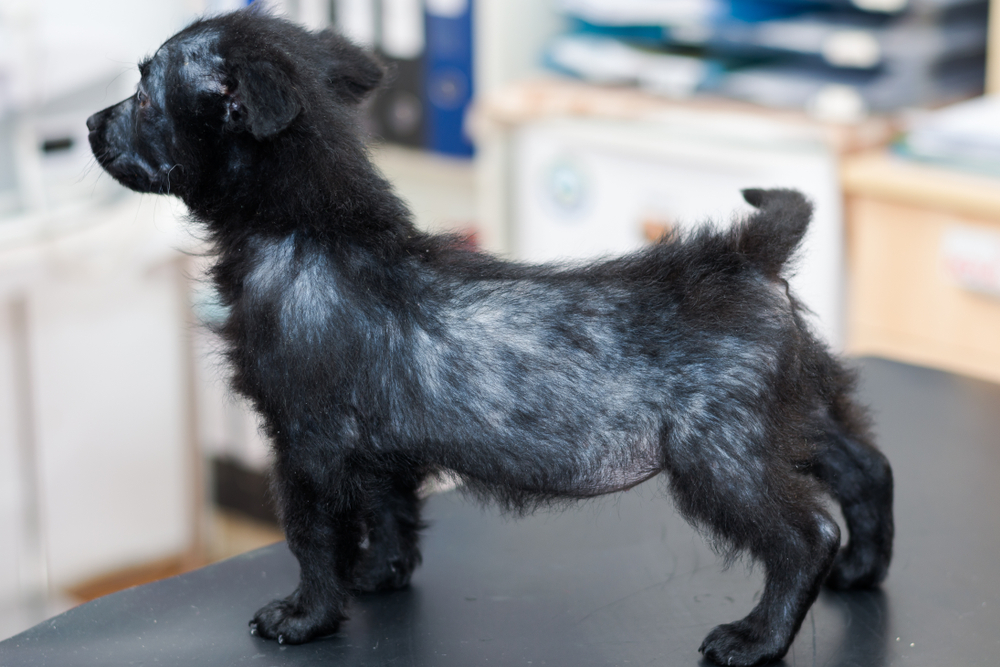
A dog or cat losing hair in a symmetrical pattern on both sides is one of the classic fingerprints of a hormonal problem, most often low thyroid in dogs or Cushing’s disease, and it looks very different from the patchy, itchy hair loss that comes from allergies or mites. Symmetrical, non-itchy thinning across the flanks, belly, or tail points toward the endocrine system. Uneven patches with scabs, red skin, or constant scratching point toward a skin cause like fleas, mange, ringworm, or allergies. Seasonal shedding, by contrast, thins the coat evenly all over without bald spots or angry skin. The pattern is the first clue, and confirming what is behind it takes bloodwork and a look at the skin under the microscope.
Lewiston Veterinary Clinic runs a full alopecia workup in our own building, with the in-house lab and skin cytology that checks for endocrine disease and rules out mites, yeast, and fungal infection on the same visit. Once we identify and treat the real cause, the coat almost always fills back in, since the hair loss was only ever a symptom of the underlying problem. If your dog or cat is losing coat and you want an answer instead of another round of guessing, request an appointment and we will map out the next steps together.
The Short Version Before You Read On
- Symmetrical, non-itchy thinning on both sides usually points to a hormone problem, while patchy, red, scabby, itchy hair loss points to a skin cause like fleas, mites, or allergies.
- Hair loss is a symptom, not a disease, so the goal of any workup is to find the specific cause driving it.
- Most pets regrow their coat once the right cause is treated, whether that is an allergy, a parasite, a thyroid issue, or stress.
- A skin exam, cytology, and bloodwork usually sort out the cause faster than trial-and-error home remedies.
When Should a Coat Change Send You to the Vet?
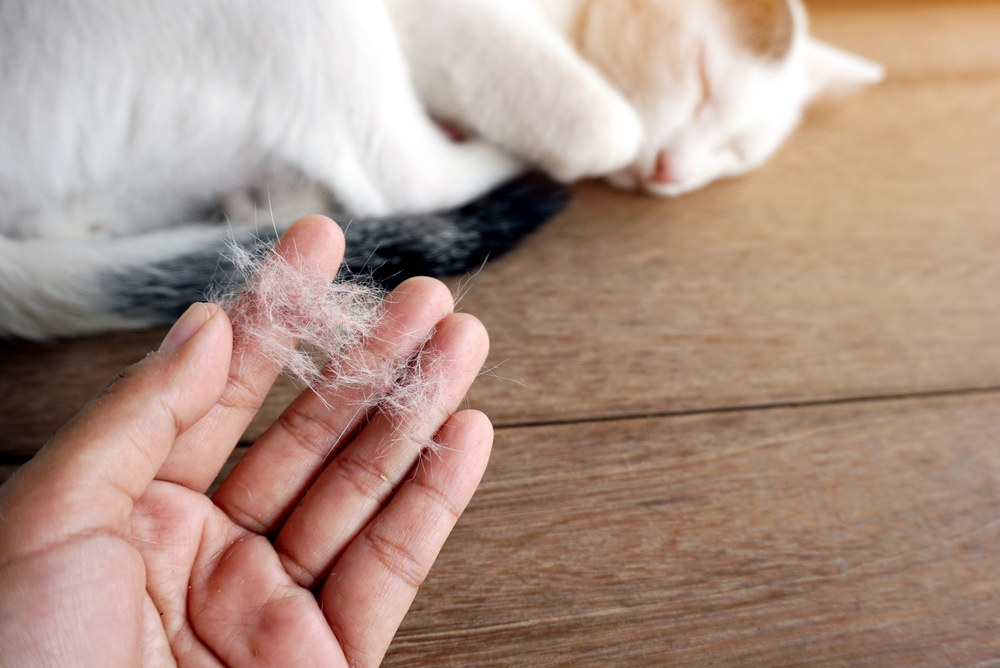
Book a visit when a coat change breaks the normal pattern. Healthy shedding thins the fur evenly, without bald spots or irritated skin. Hair loss outside of normal shedding, known as alopecia, deserves a look.
A few signs move a coat change from normal to worth a visit:
- Barbering, where a pet chews the fur down to a stubbly texture.
- Patchy thinning outside the usual seasonal shed or spots where hair does not grow back.
- Redness or scaling on the skin underneath, and scratching or licking that keeps circling the same area.
Any of those is a good reason to book one of our dermatology exams that include a full skin and coat check, where a coat concern gets looked at as part of the whole picture.
Do Allergies Belong on the Suspect List?
Allergies rank among the most common reasons a pet loses hair. An overreacting immune system creates the inflammation and itch that lead to scratching and licking, and that self-trauma is what actually thins the coat and opens up bald spots, so the hair loss is secondary damage rather than the allergy itself.
The triggers fall into a few big buckets. Pollen, dust mites, and mold are common environmental allergens, and a pet reacting to them develops chronic, itchy inflammation that wears the coat down over the seasons. Food allergies are another cause, usually a reaction to a specific protein rather than to grain, and they can drive year-round itching. And a flea allergy is especially common in mild climates, where even a single bite can set off intense itching that quickly turns into hair loss along the back and tail base.
Dogs and cats show it differently. Dogs tend to chew their paws, rub their faces, and lick their bellies and flanks raw. Cats are quieter about it, often overgrooming in private until you notice thinning on the belly or backs of the legs. If the itch and hair loss keep coming back, schedule an allergy workup so we can build a plan instead of chasing symptoms.
Do Certain Breeds Come Wired for Thin Coats?
Certain dogs inherit coat conditions that cannot be cured but can absolutely be managed so your pet stays comfortable. Knowing a breed’s tendencies sets realistic expectations, and it also tells us when to stop hunting for a fixable cause. These are diagnoses of exclusion, meaning we rule out allergies, parasites, and hormones first. Management usually centers on supportive skin care, targeted nutrition, and sometimes light therapy.
| Condition | Typical breeds | What it looks like |
| Color dilution alopecia | Blue and fawn-coated dogs | Brittle, thinning hair over diluted-color areas |
| Seasonal flank alopecia | Boxers, Bulldogs, Schnauzers | Symmetrical flank bald patches that come and go |
| Sebaceous adenitis | Standard Poodles, Akitas | Dry, scaly skin with hair loss along the back |
| Zinc-responsive dermatosis | Huskies, Malamutes | Crusting around the face and pressure points |
Might Anxiety or Soreness Be Driving the Grooming?
Pain and anxiety can absolutely drive hair loss, and it is easy to miss because the skin often looks completely normal. Pets, cats especially, express both emotional distress and physical pain through repetitive grooming that wears the fur down to smooth, thin patches. Because the two look identical, diagnostics are what tell them apart.
In cats, psychogenic alopecia is overgrooming driven by stress rather than a skin problem, leaving smooth, symmetrical thin patches on the belly or inner legs where the cat can reach. Common triggers add up quietly: a new pet, a move, construction, or a change in routine can all rank as real stressors for a sensitive cat. Dogs do their own version, licking one spot over and over until they create a raw lick granuloma. The tricky part is that pain drives the exact same behavior. A cat with idiopathic cystitis may overgroom their belly until the fur thins out, and a dog or cat with osteoarthritis may lick a sore joint bald even when the skin looks fine. If you suspect stress or pain is behind the grooming, come in for an evaluation and we can sort out which one it is.
Which Bugs and Infections Strip a Pet’s Fur?
Even strictly indoor pets can pick up parasites and skin infections, and several of the culprits are too small to see without a microscope. That is a big part of why hair loss so often needs a real diagnostic look rather than a guess. Here are the usual suspects:
- Demodex mites: Demodex mites live down in the hair follicles and stay harmless until a pet’s immune system stops keeping them in check, at which point they multiply and leave patchy areas of thinning fur.
- Sarcoptic mange: Sarcoptic mange is a contagious mite that causes such relentless itching and crusting that pets scratch away their own hair, often around the ears, elbows, and belly.
- Fleas: A single flea bite can cause enough itch to drive hair loss on its own, which is why consistent, year-round parasite prevention is worth keeping up. Steady prevention takes flea bites out of the equation entirely.
- Ringworm: Despite the name, ringworm is a fungus, not a worm, and it leaves the telltale circular bald patches while spreading readily to people and other animals in the home.
Bacteria and yeast play a role too. When skin becomes inflamed from any cause, the organisms that normally live on the surface can overgrow, and that secondary infection deepens the hair loss and the itch. Sorting all of this out is exactly what our skin scrapings, cytology, and fungal cultures are for, since each test points to a different treatment.
When Do Hormones Turn Out to Be the Culprit?
Hormones move to the front of the list when hair thins symmetrically along both sides of the body without much scratching. These changes come on so gradually that many pet families do not notice until the thinning is significant, and because the skin usually looks healthy, hormonal hair loss is easy to mistake for aging or a dull coat.
What Do Thyroid and Adrenal Problems Do to the Coat?
The two big hormonal drivers in dogs sit at opposite ends of the body. In dogs, hypothyroidism starves the coat of the hormone it needs to grow, so the fur thins and dulls right as the dog gains weight and slows down. On the other side, Cushing’s disease has a distinct look of its own, pairing symmetrical hair loss with a pot-bellied shape, thinning skin, and a noticeable jump in thirst and appetite. Cats have their own version: hyperthyroidism can leave the coat patchy and unkempt alongside weight loss, a big appetite, and restlessness.
Can Sex Hormones or My Own Skin Creams Be Involved?
They can, in ways that surprise a lot of families. In intact male dogs, testicular tumors can pump out extra estrogen that triggers symmetrical hair loss, and neutering often resolves the coat change once the hormone source is gone. Intact females can show similar coat shifts tied to their heat cycles, and spaying frequently settles those too. T
here is also an outside source worth knowing about: pets can absorb hormones from human hormone replacement creams and gels through skin-to-skin contact or by licking the spot where you applied them, so mention any topical hormones in the house.
Why Does Routine Blood Work Matter for Coat Health?
Hormone imbalances usually show up in the blood before they show up in the mirror. A thyroid or cortisol shift can be measurable well before the coat looks obviously thin, which is why baseline numbers are so useful. Building routine blood work at wellness visits into your pet’s regular care gives us a set of normal values to compare against, so when something drifts, we catch it earlier and know it is a real change rather than a guess.
Is Your Pet’s Food Doing Its Job for the Coat?
The coat is often where a nutritional shortfall shows up first, because growing hair draws steadily on protein, fatty acids, zinc, and biotin. When any of those runs short, the fur turns dull, dry, or thin before other problems surface. A complete, balanced diet covers most pets, and a boost of omega fatty acids can help a struggling coat regain some shine.
Pets with food allergies may develop itchiness that leads to hair loss, requiring a diet trial with a prescription diet to pin down the ingredient causing the reaction. If you are unsure whether your pet’s food is pulling its weight, we are happy to talk through nutrition that fits your pet’s age and needs.
What Should You Expect During a Hair Loss Workup?
A hair loss workup is a step-by-step process designed to find the cause, and knowing what to expect takes the mystery out of the visit. We start with a detailed history, which is often the most valuable step. When did the loss start, is your pet itchy, what does it eat, and has anything changed at home? From there, the visit typically moves through:
- Physical exam and pattern mapping: We look at where the hair is missing and whether the pattern is symmetrical or patchy, since that alone narrows the list.
- In-house testing: Cytology and skin scrapings check for mites, yeast, and bacteria right in the building.
- Fungal culture: When the pattern suggests ringworm, a culture confirms it.
- Blood work and endocrine panels: When symmetrical, non-itchy loss points at hormones, bloodwork checks the thyroid and adrenal glands.
- Allergy evaluation: Elimination diets or formal testing help pin down an allergic trigger.
Having an in-house lab that turns results around quickly means many of these answers come back during the same visit, so we can start on a plan sooner.
Once We Know the Cause, What Fixes It?
Treatment is always matched to the specific diagnosis rather than applied one-size-fits-all, because so many different conditions cause alopecia. Once we know the cause, we map out the best plan for your pet based on the findings and a conversation with you. Here is how the approaches line up by cause:
| Cause | Typical treatment focus |
| Allergies | Anti-itch medication, medicated baths, omega-3s, diet trials |
| Parasites | Targeted antiparasitics plus year-round prevention |
| Infections | Antibiotics or antifungals for bacteria, yeast, or ringworm |
| Hormonal conditions | Thyroid replacement, Cushing’s medication, or spay/neuter |
| Stress-related grooming | Reducing stressors, enrichment, and addressing pain |
| Nutritional gaps | Balanced diet and coat-supporting supplements |
For pets whose hair loss ties back to a painful, over-licked area, laser therapy can calm the inflammation while the root cause is treated. Follow-up rechecks matter as much as the first plan, because they let us confirm regrowth, fine-tune medications, and catch any secondary infection early. If a flare turns severe, our team also handles urgent and emergency care during our regular hours.
Common Questions Pet Families Ask About Hair Loss
Will my pet’s hair grow back?
In most cases, yes. Once the underlying cause is treated, whether that is an allergy, a parasite, a hormone imbalance, or stress, the coat usually regrows over the following weeks to a few months. Regrowth is slower when there was long-standing damage to the hair follicles or scarring, and hormonal cases can take a full grooming cycle to fill back in. Rechecks help us confirm the coat is returning as expected and adjust the plan if it is not.
Is my pet’s hair loss contagious to me or my other pets?
Some causes are, and some are not. Ringworm and certain mites like sarcoptic mange can spread to people and other animals, so those get handled with extra care at home. Allergies, hormonal conditions, and stress-related grooming are not contagious at all. Because the contagious causes look a lot like the harmless ones, testing is the only reliable way to know which camp your pet is in before it spreads.
Should I try over-the-counter remedies before coming in?
It is usually better to hold off. Home shampoos and supplements rarely fix the actual cause, and some can irritate already-inflamed skin or muddy the picture before we test. A quick exam and a few in-house tests point straight at the problem, which saves time and money compared with weeks of trial and error. If you have questions before booking, feel free to reach out with questions about your pet’s coat.
Let’s Fill That Coat Back In Together
Hair loss can feel discouraging, but it is one of the more solvable problems we see, and most pets improve significantly once we identify what is behind it. Whether your dog is scratching, your cat is quietly overgrooming, or you are seeing that telltale symmetrical thinning, there is a clear path forward.
Our team provides thorough diagnostic evaluation and a treatment plan built around your specific pet. When you are ready, get in touch to talk through the coat changes you’re seeing and we will take it from there.



Leave A Comment